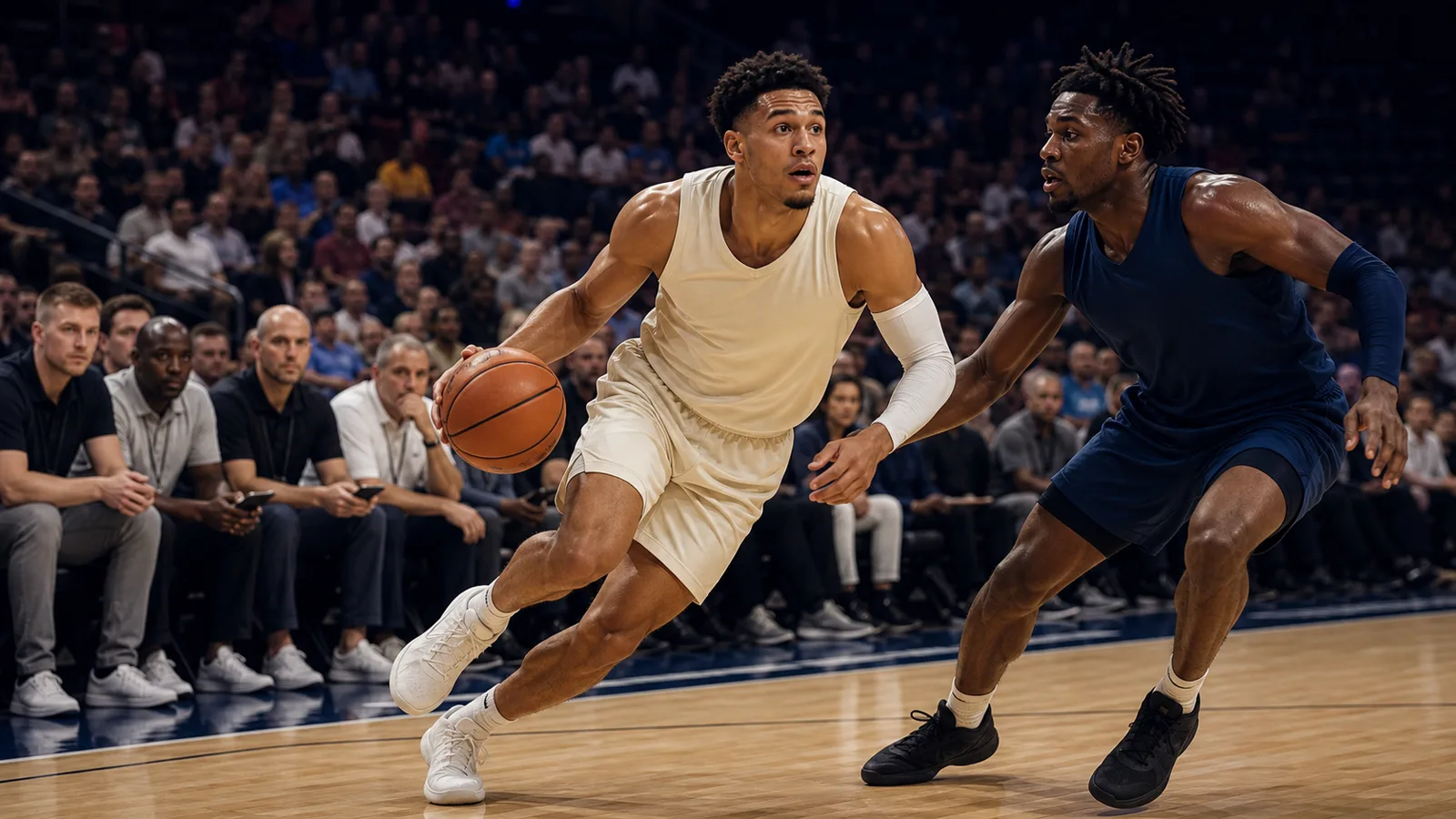
The 2026 format
The NBA’s official schedule places Summer League in Las Vegas from July 9 through July 19. All 30 teams participate, every team plays at least five games and the event concludes with semifinals on July 18 and a championship game on July 19.
Context before conclusions
Summer rosters have limited practice time and uneven continuity. A turnover can reflect poor spacing as easily as poor decision-making; a scoring burst may come against a lineup that will never share an NBA floor. The setting is useful precisely because it is imperfect, but only if the viewer keeps the imperfections in frame.
Ask whether a skill repeats under different pressures. One make is a result. Consistent balance, processing and defensive effort are evidence.
Track repeatable skills
For ball handlers, watch the first read after a screen and the willingness to move the ball early. For wings, track off-ball timing, closeout decisions and whether the shot profile stays stable. For bigs, screen angle, defensive communication and second-effort positioning often translate more cleanly than a single block total.
Look for role translation
A prospect may dominate the ball in July and play a narrow role in October. The better question is whether the player can help without controlling every possession: defend two actions, relocate on time, make the next pass and keep offensive spacing intact.
Availability is information, not a verdict
Players may sit for injury management or workload decisions. That can limit a sample without erasing development. Availability should be reported accurately and interpreted carefully, especially in an event designed for evaluation rather than a full-season championship.